The Yu-Gi-Oh! trading cardgame’s world championships were a beautiful disaster. I’ve never seen anything like this.
To understand what just happened, I need to explain what banning a card truly means to a trading cardgame, and what it implies about what’s going on the dev processes behind the scenes.
Banning a card from competitive play has huge negative impacts on your players. They’re usually the most popular, impactful, and expensive cards by definition. Their value is driven by competitive play. You might as well take a torch to your players’ card binders.
When that happens, do you really want to buy in again? That’s the pain bannings bring to players and devs. It’s why banning 2-3 cards is a huge deal.
So, what does it say when a game announces an emergency ban list of 34 cards?
Not 3-4. 34.
And what does it say when the reaction from most content creators is unbridled, hopeful joy?
Yu-Gi-Oh! has been dealing with serious problems in its system design for decades now, and it’s why I love following the content. They have few systems that can auto-balance content for them, or prevent broken interactions organically.
Those make it easy for designers to focus on creating cool gameplay instead of playing whack-a-mole with various meta problems, and Yu-Gi-Oh! has suffered accordingly.
They have no faction restrictions, barely any costing system, and the summoning restrictions are so meaningless that we’ve gone from “roughly one monster per turn” to an antimeta tech card that only works if your opponent summons 5 or more monsters in a single turn. It gets played a LOT.
The good news is these designers have been forced to get enormously creative within these restrictions. It’s led to coming up with ideas and gameplay you don’t see in any other game, anywhere.
However, there’s a limit. The game has degenerated so far into costless combos and interaction that going second often means waiting through 5-10 minute combos as people do their best to lock you out of playing the game.
Modern Yu-Gi-Oh! plays more like a fighting game than a cardgame, and getting into competitive feels just as overwhelming. People literally get told to practice their combos before playing.
For context: This is from a combo guide about what to do once playing a single card from your hand. Starting with just “Killer Tune Cue” leads into all these plays. It’s so much like a fighting game combo chain.
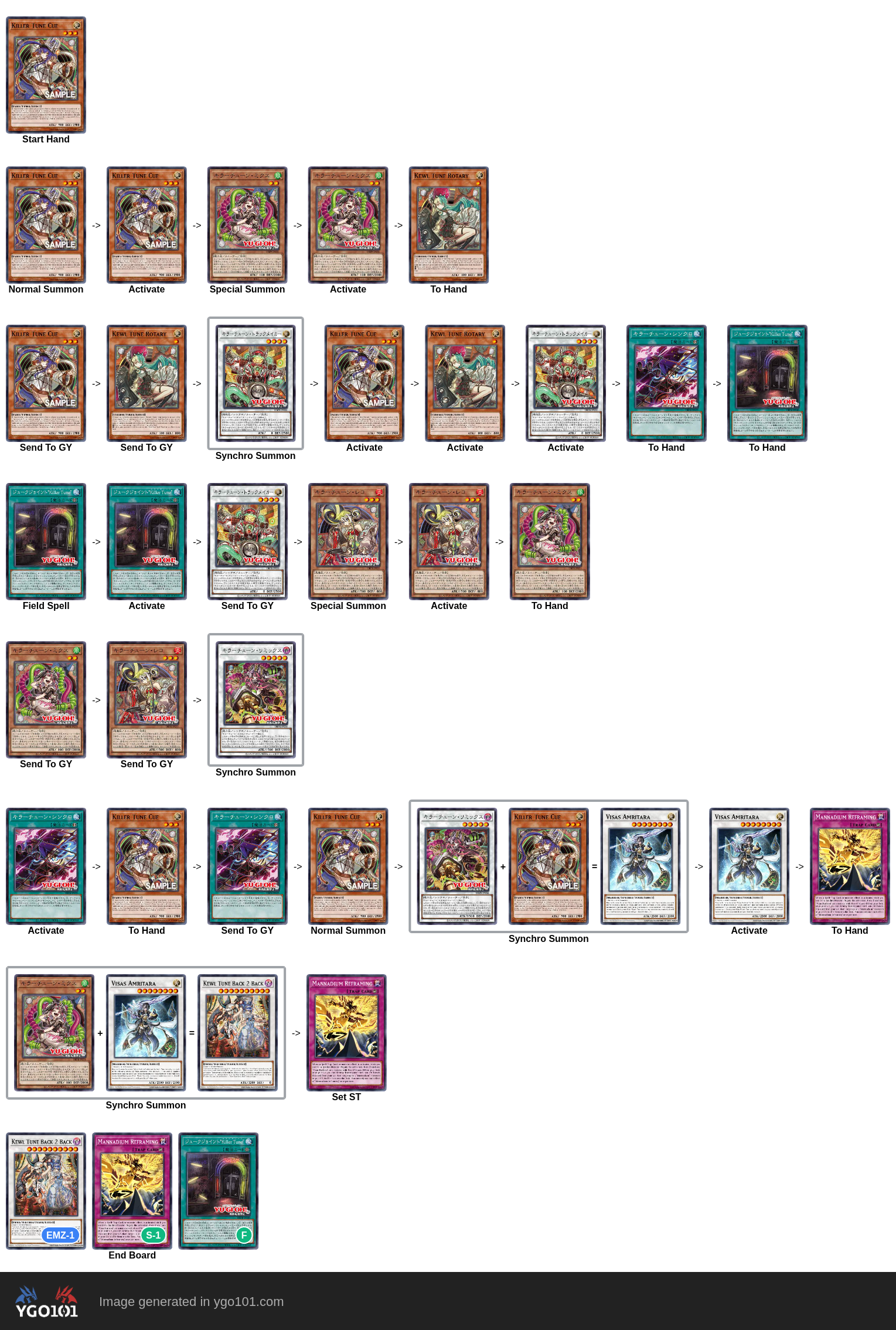
Like fighting games, people that push through to master these combos and learn how to disrupt their oppoents’ combos is enormously satisfying. Practice produces highly visible results.
However, unlike a fighting game, yugioh is turn-based. Imagine if at the start of street fighter, players flipped a coin and the loser wasn’t allowed to attack for the first 2 minutes of the game. Also, disable a bunch of their defensive moves too.
That’s what yugioh players are dealing with right now when going second.

