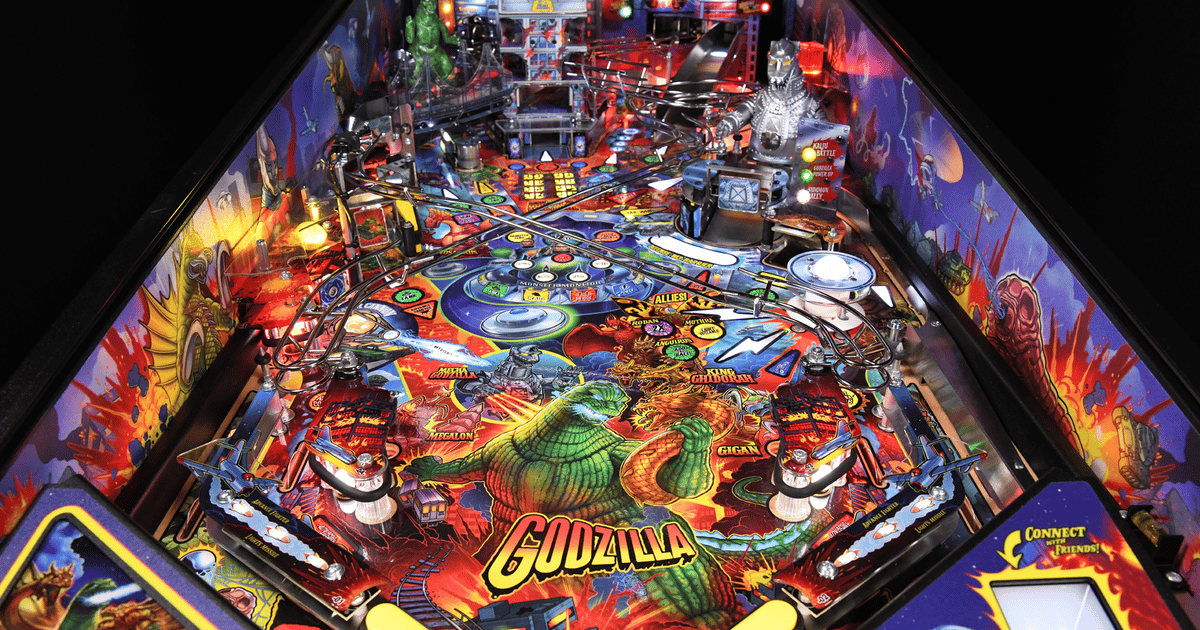
Let’s talk about the biggest incentive-alignment problem in Pinball: The 𝐌𝐮𝐥𝐭𝐢𝐛𝐚𝐥𝐥 𝐌𝐨𝐝𝐞.
Pinball builds escalation into its game design through the use of upgrades and special modes unlocked during play. Players accomplish objectives by making specific shots, often somewhat risky, building up to a game state change that massively increases scoring potential – and often changes the shot targets on the field.
Those lights on the pinball field aren’t just for show, they point you to the active shots you want to hit to progress your modes and score your Jackpots. Lit shots change regularly throughout most games.
The most exciting special modes are Multiballs. When unlocked, the Machine releases extra pinballs onto the field. This is the most intense and obvious form of special mode, because the time between each shot you need to make shrinks significantly and there’s a lot of chaos on the playfield as balls collide. You can’t easily keep your eye on the ball, because there’s often 3 of them!
However, this also gives the player an additional sense of safety, as each extra ball is an extra lifeline. You only lose once every ball in play has drained, so while you’re much more likely to lose them in multiball, you also have more to lose.

This made the mode popular with players, but there’s an optimization problem. While new players liked chasing the chaotic experience for its own sake; as they gained experience many felt obligated to try and reduce the chaos in pursuit of higher scores.
Many players started trying to “cradle” some of their balls on one flipper, carefully controlling these balls as extra lives to focus on one ball at a time. This turns the fast-paced excitement into carefully shuffling balls from one flipper to another, using microflips and similar techniques to try and keep their “extra lives”.
This was rational, and emotionally valid – because nothing sucks more than unlocking a cool mode and then instantly losing it as chaotic shots drain the extra balls faster.
The solution?
Unleash the Terminator.
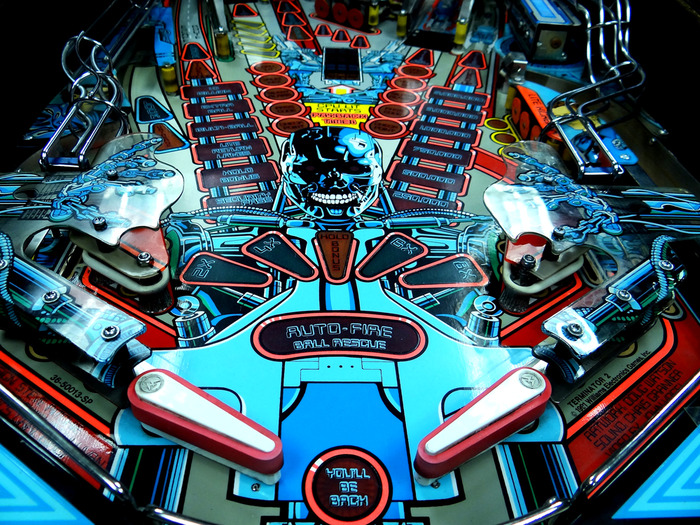
^ See the “Auto Fire” on the playfield? This was one of the earlier timed ball-saves after the plunge. “Flight Insurance” was the first instance, coming from the 1987 game “F-14 Tomcat”. However, Terminator 2 was the first to add it to the Multiball as well.
In the user manual we can see them explaining why:
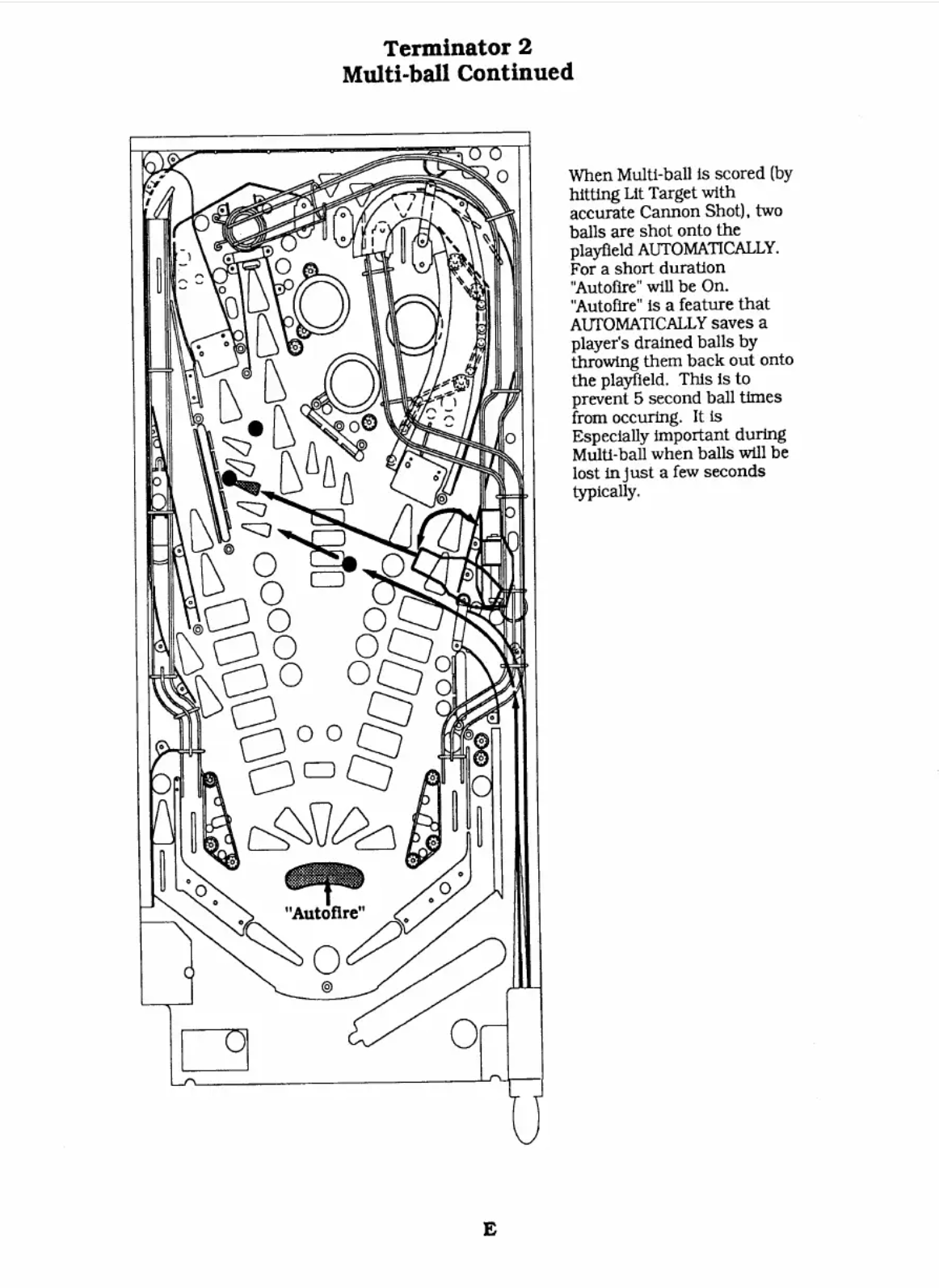
The designers added these features because the terminator playfield had an issue with balls coming out of the shooter occassionally going straight down the outlane. A software fix was easier than a hardware fix.
Not everyone was a fan. Other designers fought against the timed ball save, including with the original design of the Twilight Zone, because it reduced tension early in the game and trained players to expect ball launches would be fed to them for easy first shots. However, the features were so popular they steadily became an industry-standard.
Today, Stern Pinball‘s machines lean heavily into this multiball structure. By using a generous Ball Save timer combined with extra scoring opportunities during time-limited modes. For ~20-30 after unlocking a multiball, any ball you drain gets redeployed.
Combined with boosted scoring opportunities during time-limited modes, this safety valve flips the incentives! Why carefully trap balls when ball saves are free? This is the timefire off shots as fast as possible, aiming for the mode’s riskiest jackpots!
Once the timer is over you can cradle up and try to preserve the balls if you like, but you still get all the beautiful chaos of a Multiball when you unlock it. Of course, the relative value of these incentives can be hard to weigh – but Tim Sexton makes a good argument for taking bigger risks with Stern Machines for exactly this reason. Tim Sexton is a former Lead Developer for Stern Pinball, and this video is a great dive into how to handle multiballs differently for different styles of design.
Stern isn’t the only company to make pins tying generous ball save timers to multiball, or interweave them with limited scoring windows. However, their implementations are some of my favorites.
They do an exceptional job of building hype at the moment of multiball modes starting up, and letting you know the opportunities available for scoring. On machines like Godzilla 2021, there are also ways to trigger Multiballs right before going into one of their riskier missions, giving you the full benefit of the increased shot frequency and risk protection.
In Tyrant’s Eye, they even give you a shield to deploy between the central flippers in order to protect against central ball drains. This can be hard to use in time to save a single ball, but during a multiball players can slam the action button and raise their shield for added protection after a ball save timer expires; or if letting balls drain has a different cost (like during the dragon battle, where balls are effectively infinite, but letting too many drain exits the mode).
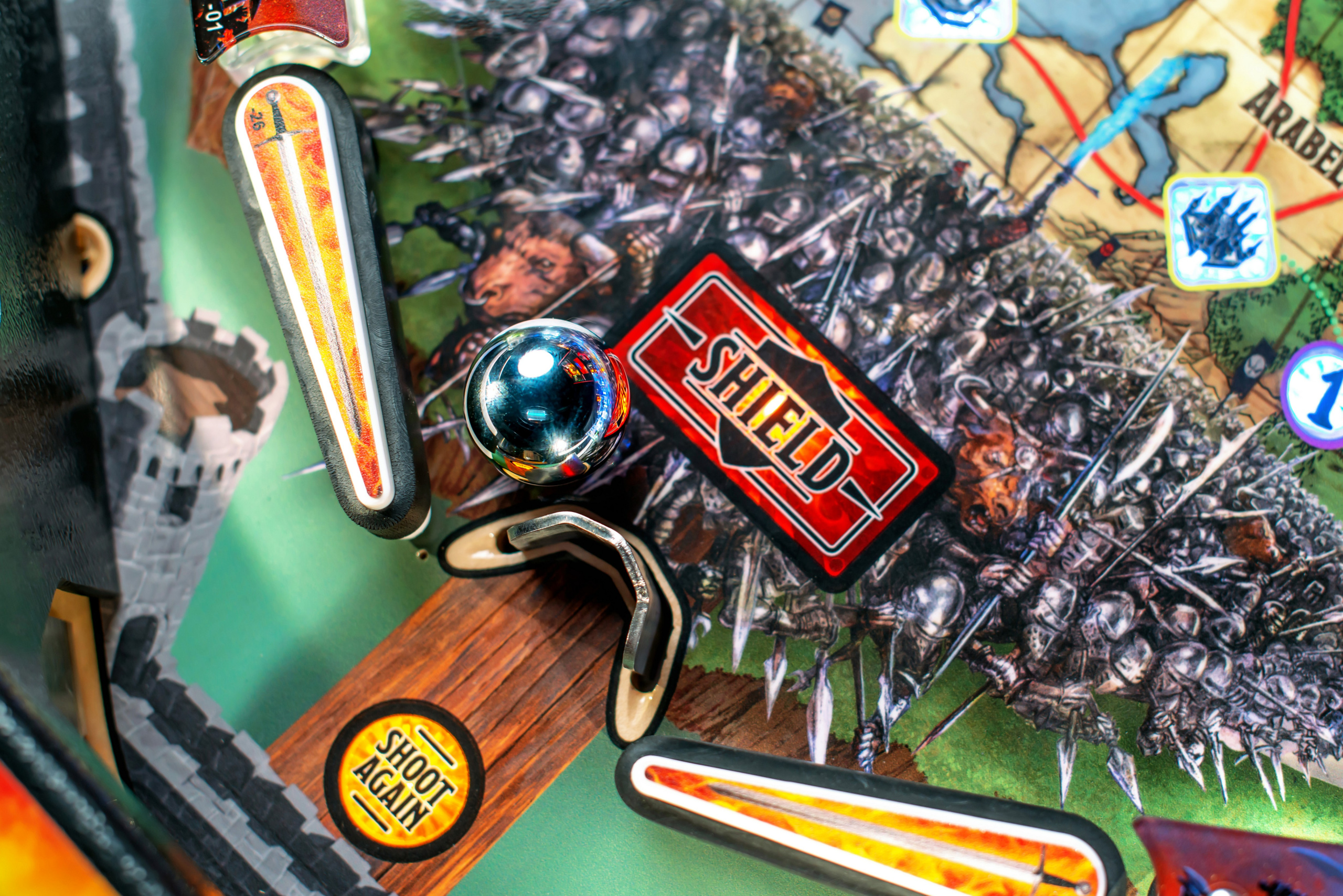
This shield can lead to awkward clogs, but it sure feels good to raise your shield before starting a high stakes mode. It makes you bolder when facing a Dragon.
Pinball Design is worth studying for all sorts of reasons. It’s a phenomenal example of the Structure of Fun.
DISCLAIMER: I reached out to a variety of pinball fans before posting this, and some took issue with me framing slow, cautious, controlled play during the start of a multiball as a problem that needed to be solved – as they view the entire point of the game to play as cautiously and controlled as possible. To them, multiball was an escalation in the difficulty of fighting for control rather than an escalation in shot-pacing. It’s a valid perspective, and tracks with the way many mastery-driven hardcore players prefer increased consistency over increased excitement.
However, much of modern pinball design pushes directly against those incentives; espescially the mechanics I cited in these Stern games. Time-limited modes do not reward players taking slow, cautious shots. They reward players who can deploy shots quickly and precisely. Likewise, the timed ball save for multiball gives you an incentive to strike the balance between rapid and precise shots. These wildly popular machines are not designed to incentivize slow, cautious, controlled play at all points. Quite the opposite.
Many pinball players abolutely enjoy mixing in fast-paced play with slower, controlled moments. Abe Flips, creator of a pinball technique series, also encourages people to not always shoot from a cradle and to practice shooting faster from an inlane feed because “it makes you a better player and its way more fun.”
Crucially – these time-limited modes are often activated through precise shots made multiple times. This is perfect for players focusing on the kind of cautious, slow, consistent play that also allows moments to take a break with a ball trapped up. Shifting the pace and tension of play like this is the bread and butter of great action-game design and encounter-pacing. We see the elements here in modern pinball too, just as we do in a game God of War. Those contrasts are what allow designers to build a beautifully designed Structure of Fun.
They might look different on the surface, but Pinball naturally has a lot in common with other precision-based action games. Heck, a perfectly timed Live Catch (where you raise your flipper to hit the ball, reaching its apex at the moment of impact to cancel a falling ball’s momentum as if you’ve broken physics) has a whole lot in common with a Perfect Parry, and feels just as satisfying to execute.


I’m sorry but this might be the biggest fundamental misunderstanding of a game and purpose. Pinball is about battling to get control. Ball save only exists to make sure that the balls get into play and to help extend minimum game time. Like the video linked is telling you how to exploit the safety for progress before going back under control. It’s not chaos for the fun of it. Hell, it’s common for a player to let balls drain during ball save so that they have less chaos and can pick off shots in safety
it’s kinda insane how much you wrote without any real understanding of pinball game design
That’s exactly the point of the article. Players naturally fight for control and safety in pinball, because as long as you avoid losing a ball you get to keep playing and keep scoring. Careful trapping/cradling and making slower-paced shots from a cradle provides safety and control, so players have a strong incentive to play that way; even if playing this way is less exciting/fun.
Much of system design is ensuring that players are incentivized in a more fun way to play, just as players in diablo 3’s early tests ran away from enemies to recover health and switching to “kill enemies to get health back” rewarded aggressive play instead.
If players naturally sought chaos for chaos’ sake, the post wouldn’t make sense.
The mix of mechanics on Modern Sterns also shifts this incentive. In the linked video, you only referenced the first tip about stern machines Tim shared. The second is the main point: the ball save timer and scoring incentives work together. Here are the key points from that section:
My point exactly. That’s from Tim Sexton, former Lead Software Engineer at Stern explaining how these mechanics work together to shift the incentives toward fast shot-making and away from trapping/cradling. He also designed rules and feature progression for some of stern’s pinball games; and he’s played a lot of pinball.
This is called “incentive alignment” where we look to match the incentives of the players to the way we think will be more fun. If you think that slow-paced play is actually more fun, it still happens at the end of a multiball’s ball save timer. That actually improves the fast-paced portion, because you get the sharp contrast between high intensity actions and lower intensity right after.
That’s peak “structure of fun”, the formula for intense emotional experiences across game genres. It’s all about that kind of escalating contrast.
Maybe Sterns designers didn’t intend to encourage rapid shot-making at the start of a multiball or the brief sense of empowerment/invincibility now you’ve got one active, but I definitely enjoy them. This post is pointing out the incentives exist, and that they solved my biggest pacing problem with the game; what I enjoyed most (rapid shot-making during multiball) seemed to be a dumb way to play, so I was doing less of it. Once I started playing more on modern sterns and understood the point incentives, I did more of it and had all that fun again.