I just went to the biggest arcade in America. I went to play through the history of arcade games, in chronological order. Here’s my biggest takeaway:
Every game designer needs to play modern Pinball machines.
Hear me out.
Once a quarter, I go deep into a game genre I never play. I learn everything I can about its iconic titles and its history, how the games evolved to where they are now, and what makes its fans love it.
I always learn a LOT of new tricks to bring back to my projects.I expected to spend this quarter on a mix of arcade cabinet classics and modern day highly tactile and immersive experiences, which try to offer something so much better than a console can; things that try to justify $5 every play.
Turns out the arcade also had a big pinball collection, which I had zero interest in… Until I tried some of the modern sterns.
These games are masterpieces of making every button press feel unbelievably satisfying. Playing one is an audiovisual explosion that puts action RPGs and casinos to shame.
It’s not JUST audio-visual though. How do you make dozens of machines feel so different to play? You’re limited by physics and the standard two-flipper layout.
Restrictions breed creativity, and over the last near-century since its invention; pinball’s designers got CREATIVE.
These games have Quests, Modes you have to unlock during play, earned features like ball saves and shifts to the play field, or even the ability to control an electromagnet to direct the ball.
Look at this dragon.
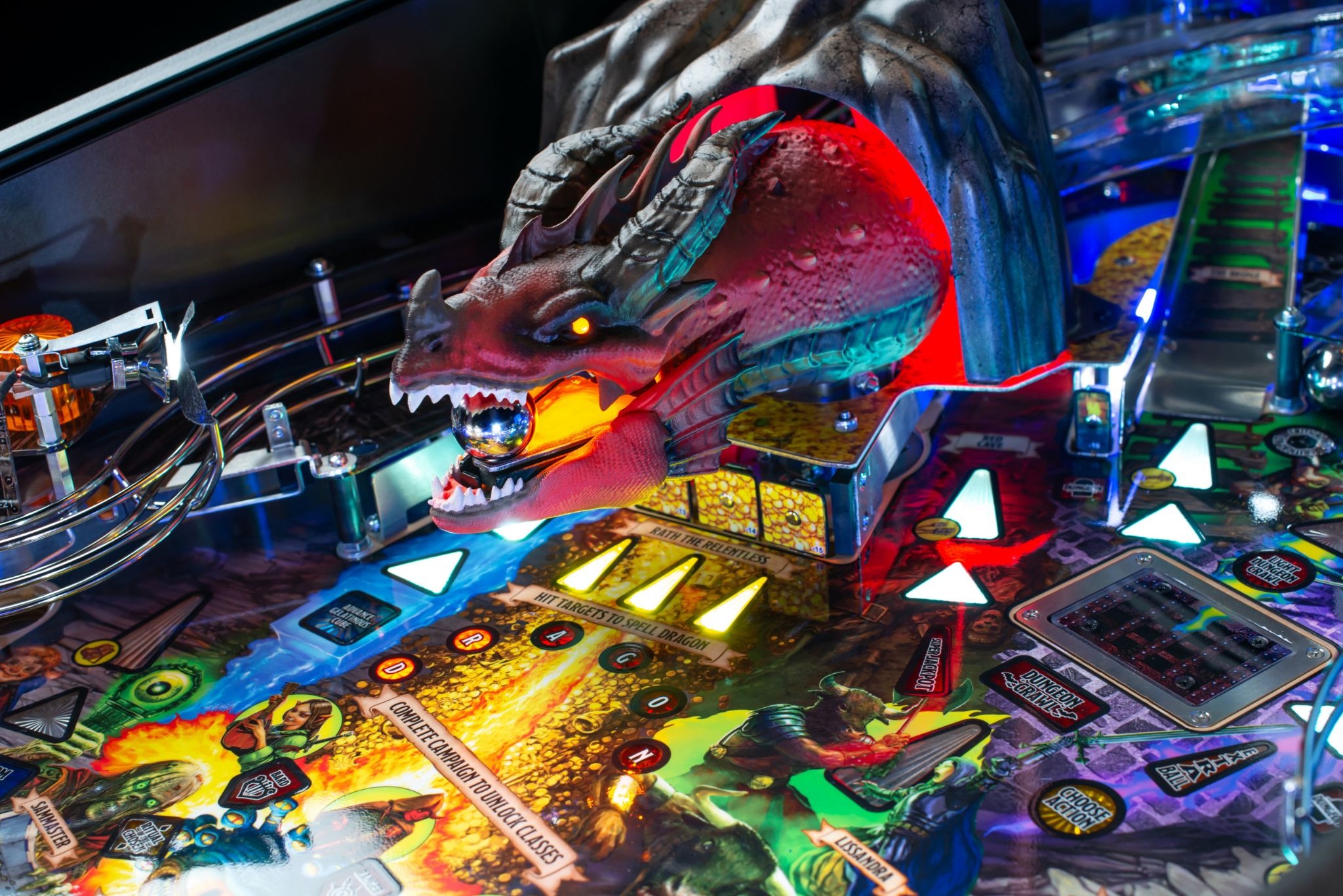
That’s from the D&D pinball cabinet “Tyrants Eye”.
When you light up the targets to spell DRAGON, then sink a specific shot, you activate a Dragon Battle. On the Premium or LE versions, it’s a pinball-breathing dragon that keeps firing pinballs at you until you’ve let too many drain, or can hit it enough times to win.
That’s one of a million little modes in that machine; which also lets you select a character class, level up a character, and collect gear during your gameplay to take to future sessions. There’s even dungeon crawling with procedurally generated layouts.
They made it a real-world roguelite!
Pinball is made to be fun from the first button press, while offering replayability worth buying a $10,000 home cabinet. That’s a remarkable design challenge. When they nail it, it’s incredible.
This has been going on for decades. The history of pinball is incredible to study. It evolved from a gambling game similar to pachinko (back when pinball actually HAD pins), to what it is now – nearly a century later.
There’s a website called Pinball Map that’ll show you the nearest pinball machines to your location. Godzilla (2021) and Medieval Madness (1997) are two great ones to look for. Modern Sterns and Jersey Jacks both have lots of great machines, and there are many excellent older cabinets too.
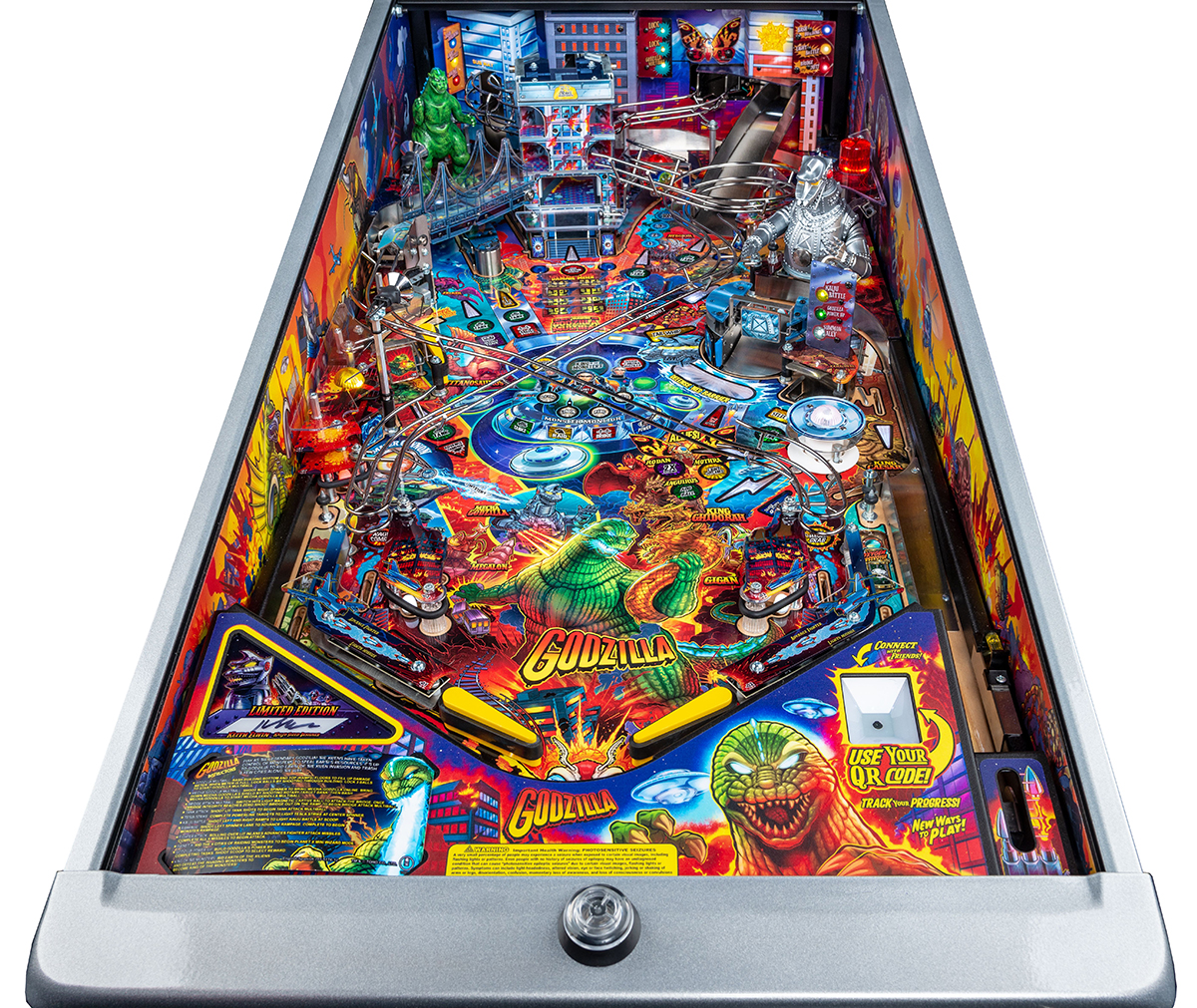
^ This machine tops a lot of “best pinball cabinet of all time” lists for a reason. There’s a cool video on how they designed it. It may have involved some safety violations with the electro magnet testing.
Whatever cabinet you find, learn the basic objectives. Just hitting the ball is fun, but it gets 10x more satisfying when you know how to start a special mode; especially the chaos of a Multiball.
Even in Pinball, goals give meaning to moment-to-moment gameplay.
Someday, I’ll unlock a “Wizard Mode”.

